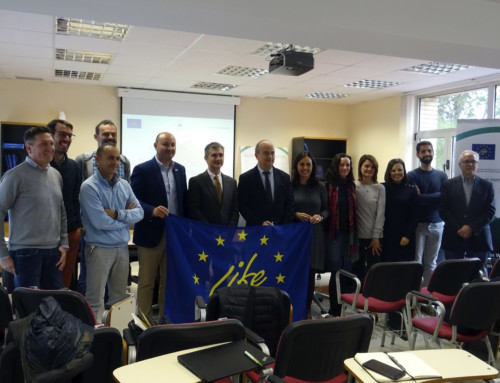
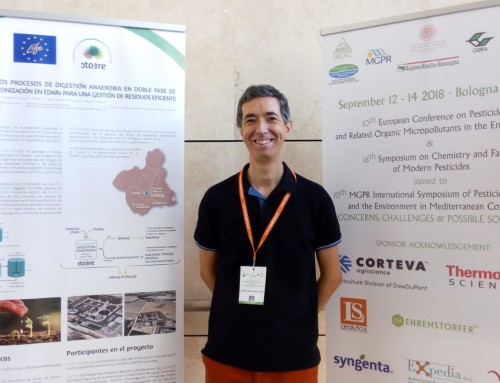
Castellón May 24, 2018 - The partners of the European project LIFE STO3RE, led by FACSA and also incorporating ESAMUR (Regional Entity for Sanitation and Wastewater Treatment of the Region of Murcia), AINIA (Research Association of the Agri-Food Industry), CEBAS-CSIC (State Agency Superior Council of Scientific Research), and IPROMA (Research and Projects Environment SL), have held this week a new working meeting in the facilities of ESAMUR to show the representatives of the European Commission and the LIFE program, the progress and results of this initiative.
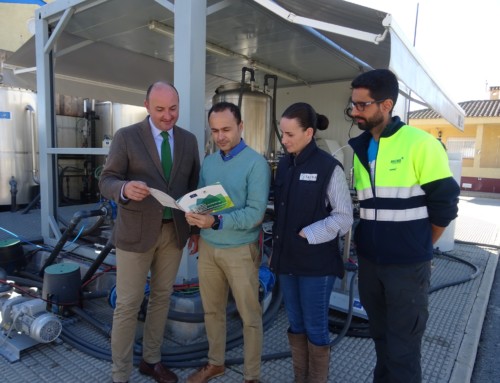
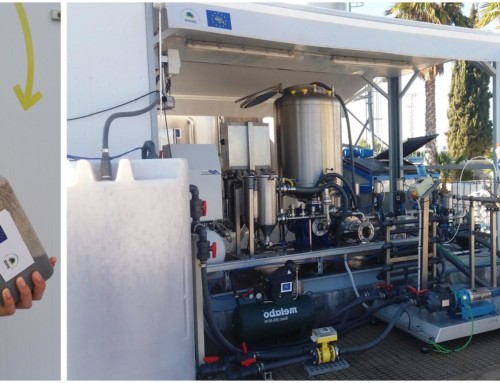
Malgorzata Piecha, Project Manager of EASME, as well as Patricia Serrano, monitor of the LIFE program, together with the project partners, visited the demonstration plant installed in the Wastewater Treatment Plant (EDAR) in the Murcian town of Totana. In these facilities, they were able to see first-hand how, through the combination of different technologies that integrate physical, biological and chemical processes, it is possible to effectively eliminate the pathogens and organic micro-pollutants present in sludge and slurry and, at the same time, obtain biogas usable as a source of energy, as well as nitrogen, potassium and phosphorus for use in agricultural holdings in the area.
The objective of the project, which was launched in September 2015 and is currently in its final phase, is to promote a circular economy model applied to the joint management of farm pig slurry and excess sludge produced in small and medium size WWTP. The meeting also served to discuss the following steps.


LIFE STO3RE (ref LIFE/14ENV/ES/000150) is part of the European LIFE Program, dedicated to the co-financing of projects in favor of the environment. With a budget of 1,957,874 euros and a duration of 40 months, the prototype built in the Totana WWTP has permited the treatment of representative mixtures of sludge from six WWTPs (Totana, Alhama de Murcia, Mazarrón, Puerto Lumbreras, Librilla and Aledo) and purines from five farms located in this area, which concentrates more than 150 farms and generates 1.35 million tons of agroindustrial waste each year.